




Copper versus PEX plumbing: 2025’s Best Choice
Why Understanding Copper Versus PEX Plumbing Matters for Your Home
Choosing between copper versus PEX plumbing is a critical decision for any new build, renovation, or pipe repair. The material you select impacts your budget, installation time, and the long-term reliability of your plumbing system. There’s no single “best” option, as each has distinct advantages.
Here’s a quick comparison:
| Factor | Copper | PEX |
|---|---|---|
| Cost | $2-$8 per foot | $0.50-$2 per foot |
| Lifespan | 50-70 years | 30-50 years |
| Installation | Difficult, requires soldering | Easy, DIY-friendly |
| Freeze Resistance | Prone to bursting | Expands, resists breaking |
| Heat Resistance | Up to 400°F | Up to 180°F |
| Recyclability | Fully recyclable | Not easily recycled |
Copper has long been the gold standard, known for its durability and heat resistance. However, PEX has revolutionized modern plumbing with its flexibility, lower cost, and simpler installation. For homeowners, this means PEX can be 20-80% less expensive than copper, including materials and labor, while copper can last 20 years longer under ideal conditions.
This guide will break down the key differences in durability, cost, installation, and environmental impact to help you make an informed choice for your home.

What Are Copper and PEX Pipes?
Before diving into the copper versus pex plumbing debate, it’s helpful to understand each material’s unique characteristics.
The Gold Standard: Understanding Copper Piping
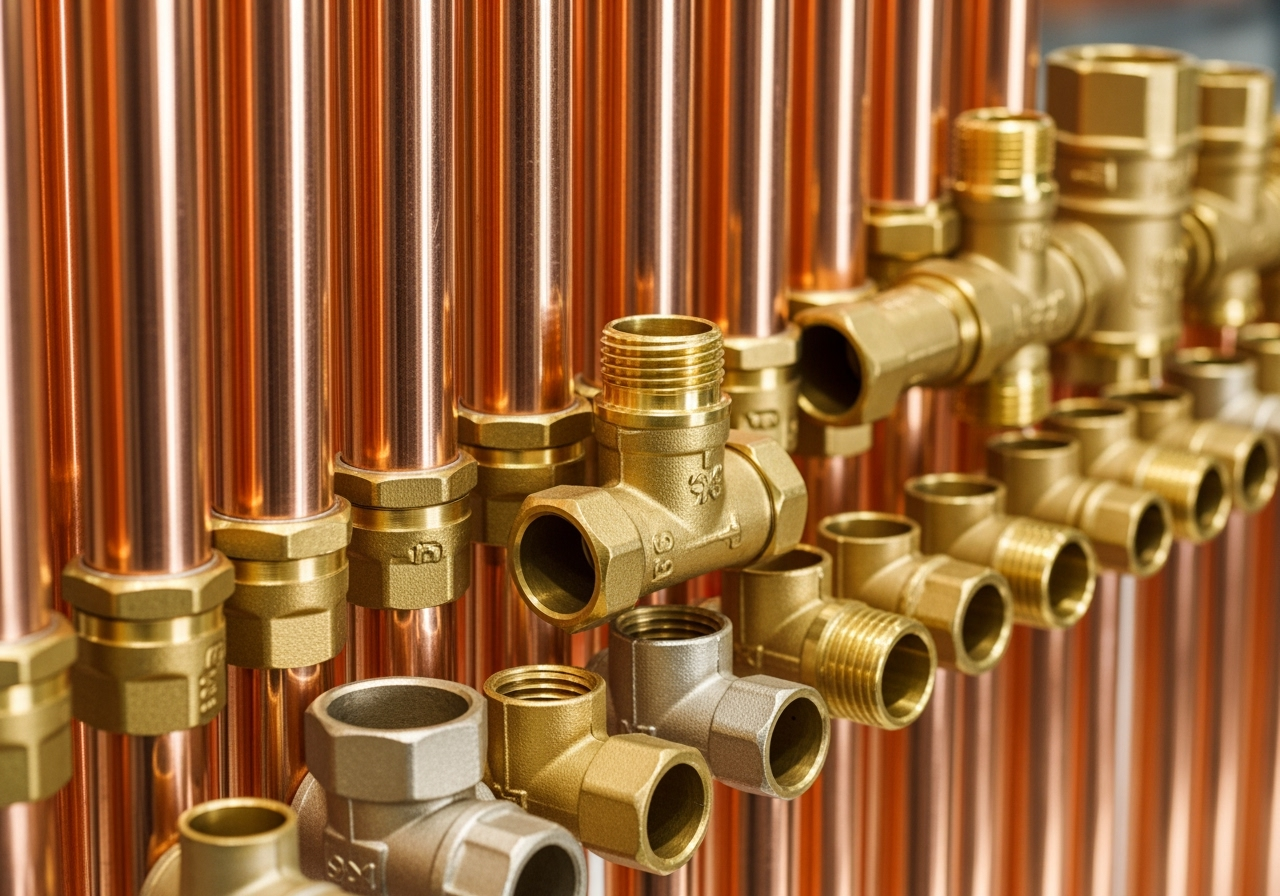
Copper is a rigid metal that has been the backbone of residential plumbing since the 1960s. As a time-tested material, it’s known for quality and durability. Plumbers install copper by soldering sections together with a torch and brass fittings, creating watertight seals that can last for generations. It comes in three main types based on wall thickness: Type K (thickest), Type L (medium, common for residential use), and Type M (thinnest).
A key advantage of copper is its longevity; a properly installed system can last 50 to 70 years or more. Additionally, copper is completely recyclable, meaning old pipes can be melted down and repurposed instead of sent to a landfill.
You can learn more about copper pipe and fittings and their various applications in modern plumbing systems.
The Modern Contender: An Introduction to PEX Piping
PEX, or cross-linked polyethylene, is a newer material that has become a popular choice in American plumbing.

Unlike rigid copper, PEX is a flexible plastic tubing that can bend around corners, simplifying installation. The tubing is color-coded (red for hot, blue for cold, white for either) for easy identification. PEX offers excellent corrosion resistance, preventing pinhole leaks common in copper systems with acidic water, and it also resists scale buildup.
There are three main types: PEX-A, PEX-B, and PEX-C, which refer to the manufacturing process. PEX-A is the most flexible and can often recover from kinks, making it a popular modern alternative. Its combination of affordability, ease of installation, and reliable performance has made it a preferred choice for many new construction and renovation projects since its widespread adoption in the 1980s.
The Ultimate Showdown: A Detailed Copper Versus PEX Plumbing Comparison
To choose between copper versus PEX plumbing, compare them in real-world applications. This detailed breakdown highlights where each material excels and where it falls short.
| Factor | Copper | PEX |
|---|---|---|
| Lifespan | 50-70+ years | 30-50 years |
| Cost/Foot | $2 – $8 | $0.50 – $2 |
| Installation Cost (Total Project) | $8,000 – $10,000 (1500 sq ft home) | $4,000 – $6,000 (1500 sq ft home) |
| Freeze Resistance | Prone to bursting | Expands, resists breaking |
| Corrosion Resistance | Susceptible to acidic water | Highly resistant |
| UV Resistance | High | Low (degrades in direct sunlight) |
| Rodent Resistance | High | Low (susceptible to chewing) |
| Heat Resistance | Up to 400°F | Up to 180°F |
| Recyclability | Highly recyclable | Difficult, not widely recyclable |
| Installation Ease | Difficult, requires soldering | Easy, DIY-friendly |
| Noise | Can be noisy (water hammer) | Quieter water flow |
| Water Quality | Antimicrobial, can leach metals | No corrosion, potential VOC leaching |
Durability and Lifespan in the Copper versus PEX Plumbing Debate
Copper pipes have a proven lifespan of 50 to 70 years, sometimes longer. They handle heat exceptionally well (up to 400°F), are resistant to UV rays, and are not susceptible to rodent damage. However, copper can corrode in highly acidic water, leading to pinhole leaks, and can suffer from scale buildup in hard water areas.
PEX pipes have an expected lifespan of 30 to 50 years. Their main durability advantage is freeze resistance; PEX can expand when water freezes and return to its original shape, whereas copper will burst. This is a significant benefit in colder climates. PEX also resists the corrosion and scale buildup that can affect copper. Its vulnerabilities include degradation from UV exposure, making it unsuitable for outdoor use, and susceptibility to rodent damage. Its heat tolerance is lower, maxing out at around 180°F.
Cost Breakdown: A Copper versus PEX Plumbing Analysis
For most homeowners, budget is a key factor, and this is where PEX has a clear advantage. PEX tubing costs $0.50 to $2 per linear foot, while copper pipe costs $2 to $8 per linear foot. This price difference is driven partly by copper’s value as a recyclable scrap metal.
Labor costs further widen the gap. Copper installation is time-consuming, requiring precise cuts and soldered joints. PEX’s flexibility allows it to be snaked through walls with fewer fittings, and connections are made with simple tools, reducing labor costs by 20% to 40%. For a 1,500-square-foot home, repiping with copper might cost $8,000 to $10,000, while the same job with PEX would be around $4,000 to $6,000.
Additionally, PEX installation often requires less demolition of walls, minimizing the need for costly drywall repairs. Understanding Why Repiping Can Save You Money is easier when considering these combined savings. For more cost details, see Cost data from Angi.com.
Water Flow, Noise, and Efficiency
Both materials provide excellent water pressure, but PEX systems often have smoother flow due to fewer fittings. PEX is also significantly quieter than copper, as its flexibility absorbs the vibrations that cause “water hammer”—the loud banging sound from faucets shutting off quickly.
In terms of heat retention, PEX is a natural insulator, keeping hot water hotter as it travels from the water heater. This reduces wait times at the faucet and can lower energy bills. Copper, a conductor, loses heat more quickly. Many PEX systems use a manifold, a central hub where each fixture gets a dedicated line. This allows you to shut off water to a single fixture for repairs without disrupting the rest of the house, a convenience not typically found in traditional copper systems.
Installation Process: Professional vs. DIY Friendliness
The installation process for copper versus PEX plumbing highlights the evolution of plumbing technology and significantly impacts project cost and complexity.
Installing Copper: The Traditional Method
Installing copper pipes is a craft that requires professional skill. Because copper is rigid, each pipe must be cut to a precise length, and every turn requires a fitting. The standard joining method is soldering, which uses a torch to heat the pipe and melt solder into the joint. While this creates a strong, reliable seal, it also introduces an open flame into walls, a fire hazard that demands experience to manage safely.
Copper installation requires specialized tools and a practiced technique to create leak-free joints. The process is labor-intensive, involving careful preparation for each connection. In existing homes, this often means cutting into drywall to access pipes, adding repair work and cost to the project. For these reasons, professional installation is essential for copper plumbing. Our certified plumbers at FlowPros LLC have the expertise to handle copper repiping safely and correctly. Learn more by reading our guide on What is Copper Repiping and How Do I Know If It’s Time for It?
Installing PEX: The Flexible Solution

PEX installation is much simpler, primarily due to its flexibility. PEX can bend around corners and obstacles, allowing for long, continuous runs from the water source to a fixture with minimal connections. In remodels, this flexibility is a major advantage, as PEX can often be snaked through existing walls without extensive demolition, saving time and money on repairs.
Connection methods for PEX are straightforward and do not require an open flame. Options include crimp rings, clamp connections, and push-to-connect fittings, which create a watertight seal with simple tools. While these methods are more accessible for DIY repairs, we still recommend professional installation for whole-house projects to ensure compliance with local codes and long-term system efficiency.
For professionals, the faster installation time translates directly into lower labor costs for the homeowner. Whether you’re considering a full repipe or a small repair, the team at FlowPros LLC is ready to help with all your Plumbing Services needs.
Health, Safety, and Environmental Impact
When choosing between copper versus PEX plumbing, it’s important to consider the impact on your family’s health and the environment.
Water Quality and Safety Concerns
Copper pipes have natural antimicrobial properties that help prevent bacterial growth. However, in homes with acidic water, copper can leach into the water, creating a metallic taste and potentially causing corrosion over time. While the body needs some copper, excessive amounts can be a health concern.
PEX is plastic and therefore highly resistant to corrosion, so you don’t have to worry about rust or metal leaching. However, some studies, like a Purdue University study on PEX water quality, indicate that new PEX pipes can release certain chemicals. This potential for initial chemical leaching may cause a temporary taste or odor, though it typically diminishes over time and levels generally remain within safe health standards. PEX is also semi-permeable, meaning contaminants could theoretically seep through the pipe if it’s buried in contaminated soil.
Regardless of your choice, a water filtration system can provide an extra layer of protection and peace of mind.
Environmental Footprint: Production and Recycling
Copper and PEX each have environmental trade-offs. Copper mining is an energy-intensive process with significant environmental impact, including habitat destruction and greenhouse gas emissions. However, copper is highly recyclable; old pipes can be melted down and reused indefinitely, reducing the need for new mining and making it a sustainable choice in the long run.
PEX is derived from oil and natural gas, which are non-renewable resources. Its manufacturing process, however, consumes less energy and produces fewer greenhouse gas emissions than copper production. The main environmental drawback of PEX is at the end of its life. It is not easily recycled, and most used PEX tubing ends up in landfills. While some can be repurposed, true recycling is limited.
The “greenest” choice depends on whether you prioritize lower production impact (PEX) or end-of-life recyclability (copper). At FlowPros LLC, we help St. Petersburg homeowners steer these decisions based on their specific needs and values.
Frequently Asked Questions about Copper and PEX
Homeowners often have questions when comparing copper versus PEX plumbing. Here are answers to the most common ones.
Should I replace my existing copper pipes with PEX?
It depends on the condition of your current pipes. If your copper pipes are in good shape with no leaks or pressure issues, there’s no urgent need to replace them. However, if you’re experiencing recurring pinhole leaks, low water pressure from corrosion, or have acidic water that is damaging the pipes, switching to PEX is a smart move. PEX is resistant to corrosion and is often a more affordable solution for a full repipe, especially during a major renovation when walls are already open.
If you’re considering this upgrade, you can learn more about what the process involves by exploring our Repiping Services.
Which pipe is better for hot water heaters?
Copper is the required choice for connecting directly to a water heater. Water heaters can produce very high temperatures, and copper can safely handle heat up to 400°F. PEX has a maximum temperature rating of around 180°F and is not safe for a direct connection.
The standard and correct practice for a PEX system is to use a copper stub-out—a short, 18- to 24-inch section of copper pipe—to connect to the water heater. The PEX tubing then connects to this copper section. This hybrid approach provides the necessary heat resistance at the source while allowing you to use PEX for the rest of the system.
Can PEX and copper pipes be used together in the same system?
Yes, and it’s very common. Hybrid systems that mix copper and PEX plumbing can offer the best of both materials. For example, you might use copper for the main supply line and then transition to PEX for distribution lines to individual fixtures. This leverages copper’s durability where it’s most needed and PEX’s flexibility and lower cost elsewhere.
Connecting the two materials is simple using special transition fittings like push-to-connect, compression, or crimp fittings. This flexibility allows a plumber to design a custom system that uses each material to its best advantage. To explore a custom solution for your home, contact us about our Plumbing Services.
Your Best Choice: Expert Plumbing Recommendations
The right choice in the copper versus PEX plumbing debate depends on your budget, priorities, and specific home needs. There is no single answer that fits every situation.
PEX is an excellent choice if affordability and a fast, less invasive installation are your priorities. You’ll save on material and labor costs while gaining benefits like freeze resistance, quieter pipes, and better heat retention.
Copper remains the gold standard for longevity and proven durability. With a lifespan of up to 70+ years, it offers superior heat resistance and is fully recyclable, making it a sustainable long-term investment.
For homeowners in St. Petersburg, local conditions like high heat and humidity, occasional freezes, and variable water hardness are important factors. Copper’s high heat tolerance is a plus for any exposed pipes, but PEX’s resistance to corrosion and scale buildup in harder water, along with its ability to better tolerate freezing events, are major advantages. We have helped countless St. Petersburg-area homeowners weigh these exact trade-offs.
Your plumbing system is too important to leave to guesswork. It impacts your home’s value and your family’s daily comfort. At FlowPros LLC, we understand the unique challenges of St. Petersburg homes, from variable water hardness and coastal humidity to extreme weather swings. Our certified plumbers partner with you to find the solution that fits your home, budget, and long-term goals.
Whether you’re facing leaks in old copper pipes or planning a full repipe, we’re here to provide clear options and expert work. Ready to make the best decision for your home? Contact FlowPros LLC today to learn why St. Petersburg homeowners trust us with their plumbing. Explore our Plumbing Services: Repiping and let’s build a reliable system your home deserves.